

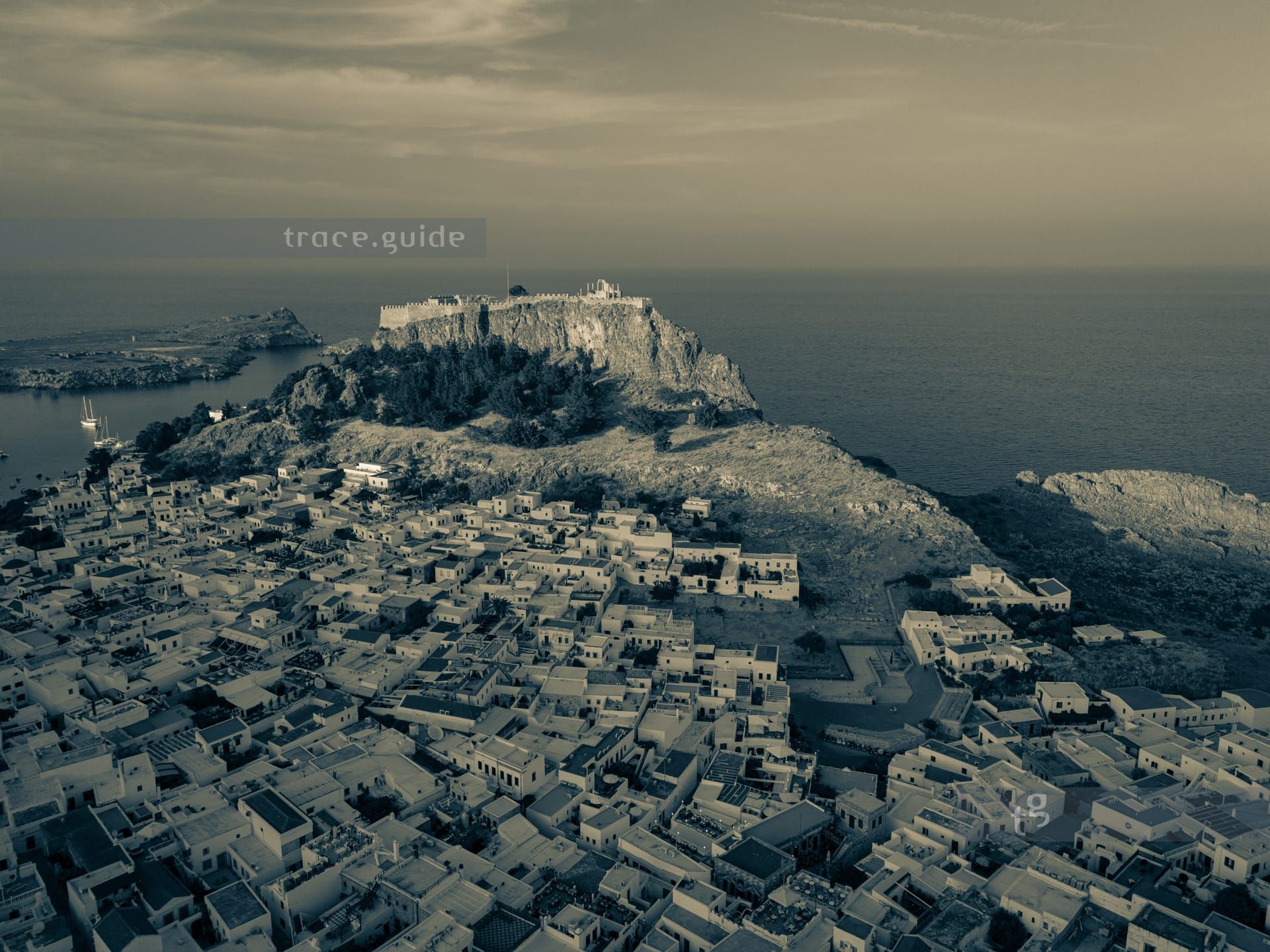
In high season, hordes of visitors storm the most impressive historical sight on the island of Rhodes. On the 8000 m2 rock plateau of the Acropolis of Lindos, you can find compressed history on every square meter, stretching back to prehistoric times. Only the cave in the rock, facing the sea, and its importance for the creation of this cult site, remains invisible to most people.
Important places of worship are often located in impressive natural settings with a view that dominates the landscape. As soon as buildings are built there and the place gains importance, a development towards strategic importance is underway, which is why such places become fortresses over the course of history. In addition, they are usually located on important connecting routes. The Acropolis of Lindos is an exemplary example of this: originally used as a Bronze Age place of worship, the first building is built, then a temple district, which is fortified. Then everything is turned upside down through conquest and plunder, and the ruins and their stones are turned into a fortress. In between there are also fires, earthquakes and reconstructions - nightmare or paradise for every archaeologist who then researches there and tries to reconstruct a chronological construction sequence, since the events mentioned occur several times.
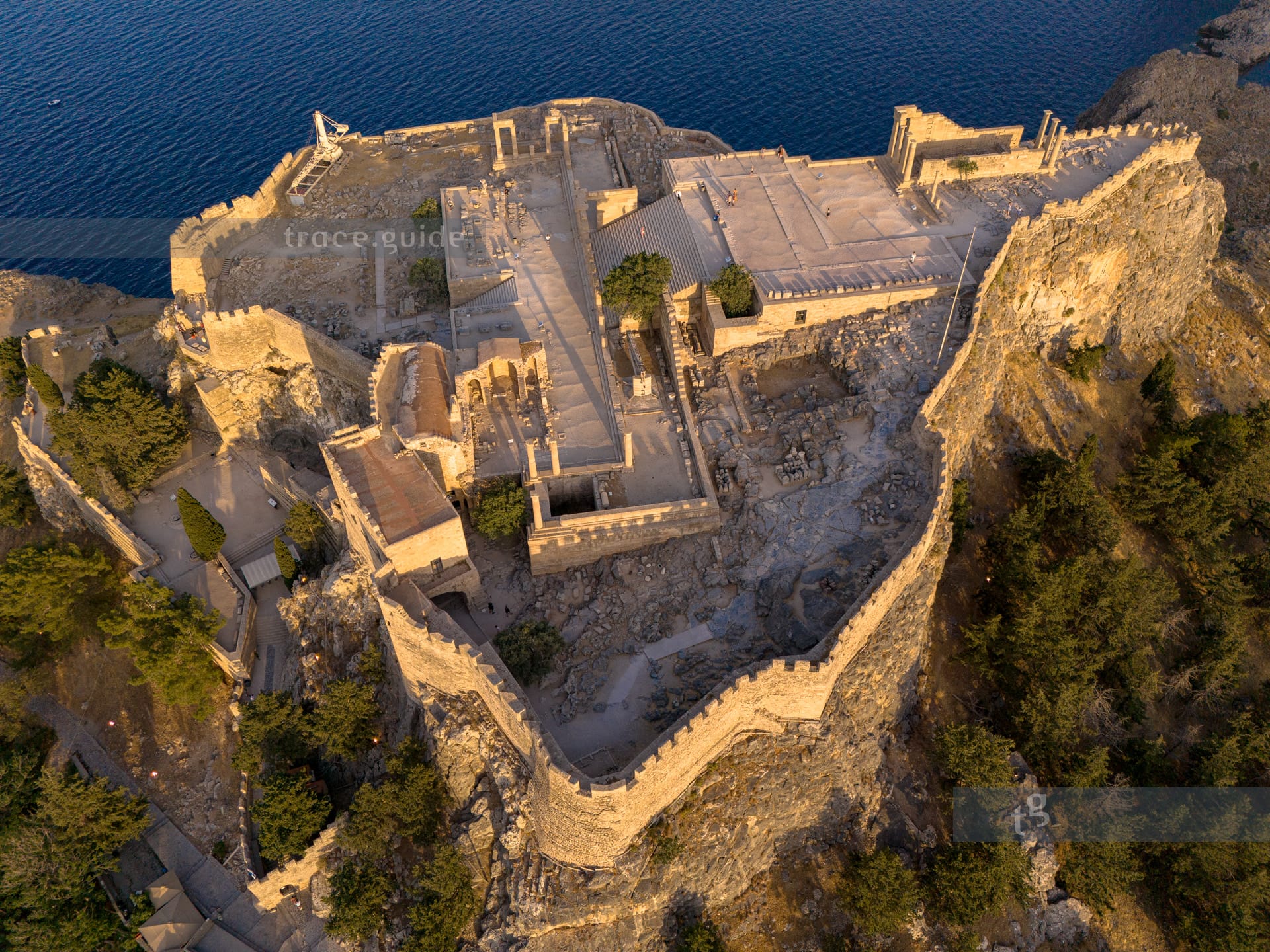
The construction of a temple for the goddess Athena Lindia in the 6th century BCE is clearly traceable from a historical perspective. BC on the edge of the plateau and directly above the impressive grotto with its caves. There are finds for everything earlier, the context of which remains speculative. This also applies to the sparse knowledge about the grotto now known as "Panaghia Spiliotissa" (Virgin Mary in the Cave), in which the origins of cult activity in honor of a pre-Greek nature deity are located, who was worshipped there as early as the Minoan and Mycenaean times. The Greeks used it to build the goddess Athena and her temple directly above the grotto. Everything above was made of stone, while everything below was made of wood, which left no archaeological traces, as well as a cult image with almost absolute certainty. The fact that the cave did not lose its cultic significance is shown by the traces of the foundations of a small Christian church in the cave area. This type of "cave church" can be found in large numbers in modern-day Greece. A possible cult practice in honor of Athena in which both the temple above and the cave below played a role can no longer be reconstructed.
prehistoric times. Only the cave in the rock, facing the sea, and its significance for the creation of this cult site, remains invisible to most people.